
Choosing a Custom Home Builder: 2026 Ontario Guide

Updated: Aug 20
Did you know that most custom home delays in Ontario aren't caused by the weather or material shortages, but by preventable gaps in communication and permit paperwork? When you're investing your family's future and hard-earned capital into a new build, the stakes feel incredibly high. It's natural to feel a sense of unease about whether your vision will actually translate to the finished product. Knowing exactly what to look for in a custom home builder is the difference between a stressful project and a seamless experience.
We understand that the fear of budget overruns and the complexity of the 2026 Ontario Building Code can be overwhelming. You want a partner who treats your home with the same respect as their own legacy. This guide provides a clear vetting framework to help you choose a builder who stays on schedule and keeps your budget intact. We'll explore the benefits of an integrated design-build approach and how to navigate new 2026 regulations, such as the updated Tarion registration deadlines and fire safety rules, so you can move forward with absolute confidence.
Table of Contents
Understanding Builder Models: Design-Build vs. General Contractors
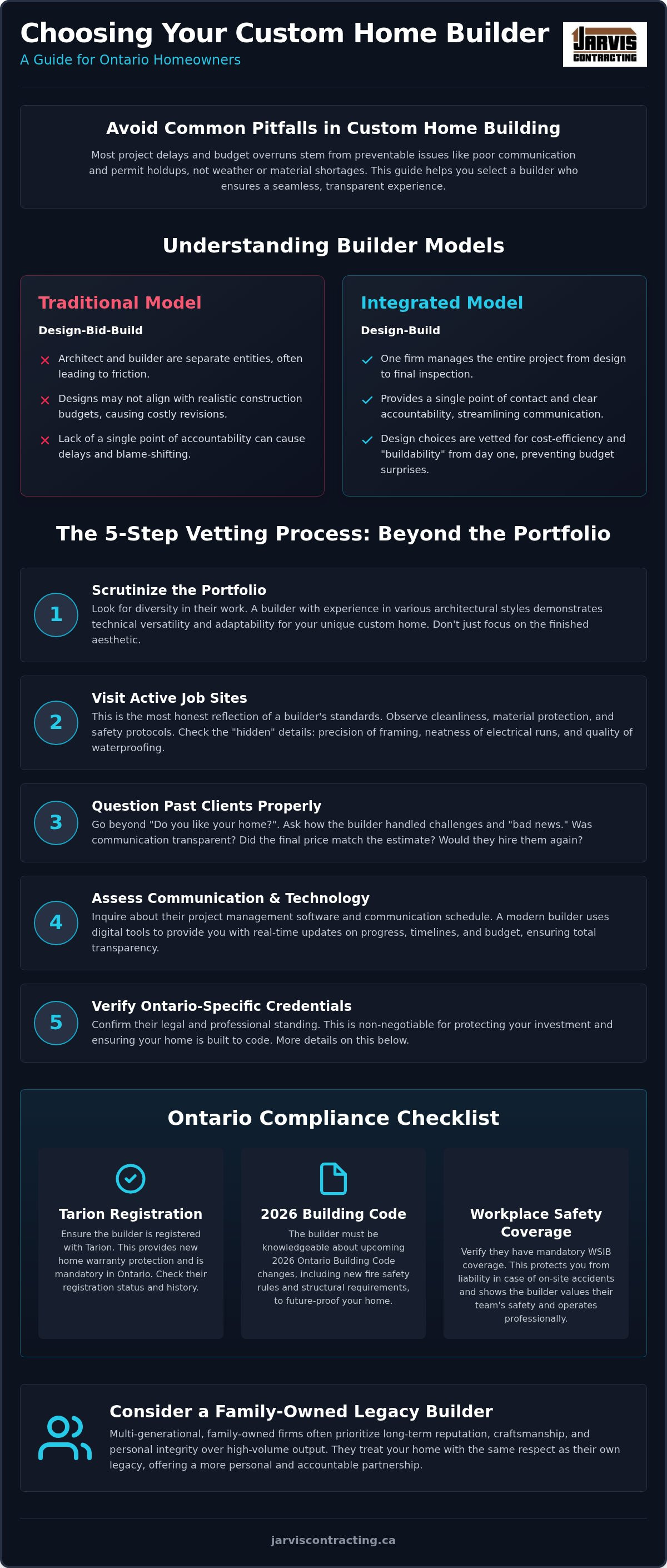
The journey to a bespoke home begins with a fundamental choice: how your team is structured. Many homeowners start by hiring an architect and then bidding the plans out to various contractors. This traditional "Design-Bid-Build" model often creates a friction point where the creative vision and the realistic budget collide. It isn't uncommon for a family to spend months on beautiful blueprints only to find that construction costs in Ontario have shifted, making the project unfeasible.
Often, the financial feasibility of a custom build depends on the sale of other real estate assets. If you are looking to sell land to developers Vancouver, Buildingsites.ca provides a specialized platform to help you secure the capital needed to move forward with your Ontario project.
When considering understanding the self-build process, you'll find that the design-build model offers a more unified path. In this integrated approach, one firm manages everything from the initial sketches to the final structural inspection. This synergy ensures that every design choice is vetted for "buildability" and cost-efficiency before it's finalized on paper. It eliminates the disconnect that often plagues luxury residential projects.
The Single Point of Contact Advantage
One of the most critical factors in what to look for in a custom home builder is clear accountability. In a design-build framework, there's no room for the builder to blame the architect for a technical error, or for the designer to claim the builder is misinterpreting the plans. This unity streamlines communication and protects the project timeline. In the GTA and Durham Region, where municipal requirements are increasingly complex, having a single team manage these moving parts prevents delays. It's about creating a cohesive environment where the craft is respected and the client's vision remains the priority.
Evaluating the Builder’s In-House Expertise
When vetting potential partners, ask whether they employ in-house architectural designers or simply outsource the work to external firms. A truly integrated firm, like a seasoned second-generation family business, understands the nuances of Ontario's landscape and climate. You should determine if they handle the entire permitting process, which is a major pain point for many homeowners. A builder who understands the structural implications of a design from day one will provide a more accurate initial cost estimate. Knowing what to look for in a custom home builder includes identifying their ability to bridge the gap between creative design and technical execution. This foresight prevents the hidden "surprises" that often lead to budget overruns.
The 5-Step Vetting Process: Beyond the Portfolio
Vetting a builder goes far beyond scrolling through a polished Instagram feed. While a portfolio shows the finished aesthetic, it rarely reveals the quality of the process or the resilience of the structure. When you're determining what to look for in a custom home builder, start by scrutinizing the diversity of their work. A builder who only executes one specific style might lack the technical versatility required for a complex, bespoke addition or a modern home with unique structural demands. You want to see evidence that they can adapt to different architectural languages while maintaining high standards of craftsmanship.
Why Active Job Sites Tell the Real Story
An active job site is the most honest reflection of a builder's character and professional standards. Unlike a staged model home, a live site shows you how the team operates day-to-day. Look for an organized, clean environment where materials are protected from the elements and safety protocols are strictly followed. This level of order reflects a deep respect for the client's property and the safety of the tradespeople. Pay close attention to the "hidden" details; the precision of the framing, the neatness of the electrical runs, and the thoroughness of the waterproofing tell you more about the home's longevity than any countertop ever could.
Questioning Past Clients Properly
References are a standard part of the process, but the value lies in the specific questions you ask. Don't just ask if they like their home. Instead, dig into how the builder handled "the bad news." Every project faces a challenge at some point, whether it's a structural surprise or a municipal delay. You need to know if the builder was transparent and proactive during those moments. Ask if the final price remained consistent with the initial estimate and if the communication remained steady throughout the 15 to 18-month build. Most importantly, ask if they would trust the firm again for a major renovation or custom project.
Finally, verify the builder's professional standing and financial health. In Ontario, it's essential to confirm they are licensed and in good standing with the Home Construction Regulatory Authority (HCRA). A builder with a solid reputation will also have a transparent history of paying their subcontractors and suppliers on time. Building a home is a long-term partnership, so trust your gut feeling regarding their values and integrity. Choosing a partner who views your project as a reflection of their own family legacy is a vital part of what to look for in a custom home builder.
Transparency and Communication: The Digital Back-End
Building a custom home in Ontario is a significant commitment that often spans 15 to 18 months. During this time, the quality of your experience hinges entirely on the clarity of the information you receive. When you're evaluating what to look for in a custom home builder, look past the charming personality and ask about their reporting systems. A professional firm doesn't rely on verbal assurances or scattered emails. Instead, they use structured digital systems to track every decision, from the initial architectural sketches to the final choice of trim colour. This level of organization is what separates a chaotic project from a seamless one.
The Role of Modern Project Management
A tech-savvy builder typically runs a more efficient and organized job site. By using dedicated project management software such as BuilderTrend or CoConstruct, a builder provides you with a centralized digital portal. This allows you to view daily logs, real-time schedule updates, and progress photos from your mobile device or computer. It's a level of transparency that eliminates the anxiety of "not knowing" what's happening on-site while you're at work or away. Centralized storage for permits, designs, and warranties also ensures that your project's history is preserved and accessible. This digital back-end is a hallmark of a builder who values precision and respects your need for consistent, honest information.
Financial Transparency and Payment Schedules
Budget overruns are a primary concern for any homeowner, which is why a detailed, line-item budget is essential. You should avoid "lump sum" quotes that lack a specific breakdown of where your capital is being allocated. A professional builder will provide a clear "Change Order" process. This ensures that if you decide to upgrade a fixture or modify a room layout, you'll see the exact cost impact and sign off on it before the work begins. It's about maintaining financial integrity and preventing "sticker shock" at the end of the project.
When vetting a builder’s financial systems, it is worth noting that top-tier firms often utilize specialized bookkeeping services like JobCost Genius to provide the detailed reporting and cost tracking necessary for complex builds.
Your contract should also feature a payment schedule tied to specific construction milestones rather than arbitrary calendar dates. This ensures you're only paying for work that has been completed and verified. In Ontario, it's vital to ensure your agreement includes a clear "holdback" clause as required by the Ontario Construction Act. This legal requirement protects you by ensuring a percentage of the contract price is retained until the project is substantially complete. Understanding these financial safeguards is a critical part of knowing what to look for in a custom home builder who operates with professional authority and a sense of duty toward your investment.
Ontario-Specific Standards: Legalities, Warranties, and Tarion
In Ontario, the legal framework surrounding residential construction is designed to protect your investment and your family's safety. When you're determining what to look for in a custom home builder, their adherence to provincial regulations is the most critical benchmark of their professionalism. A builder who cuts corners on paperwork is likely to cut corners on the structure itself. Beyond the technical skill, you need a partner who operates with total transparency regarding their licensing, insurance, and warranty obligations. This ensures that your project remains a source of pride rather than a legal liability.
Every legitimate builder in the province must be licensed by the Home Construction Regulatory Authority (HCRA) and registered with Tarion. You should also verify that the firm carries at least $5 million in General Liability Insurance and maintains valid Workplace Safety and Insurance Board (WSIB) coverage for every person on your property. These aren't just administrative hurdles; they're the safeguards that protect you from financial ruin in the event of an accident or structural failure.
The Critical Role of Tarion Warranty
The Tarion warranty program provides mandatory 1, 2, and 7-year protections against various defects. Effective January 1, 2026, new freehold homebuyers in Ontario must complete their Tarion registration within 45 days of purchase to ensure they receive the maximum deposit protection. You can use the Tarion Ontario Builder Directory to check a firm's claims history and ensure they're in good standing. Hiring an unregistered builder is a significant risk that can void your insurance and leave you without recourse if structural issues arise. A builder's track record with Tarion is a clear indicator of their commitment to long-term quality.
Local Knowledge: GTA and Durham Region Permitting
Building in the GTA or Durham Region requires a deep understanding of local zoning bylaws and environmental regulations. If your property is near a waterway or ravine, your builder must navigate the requirements of conservation authorities like the TRCA or CLOCA. Furthermore, as of July 2026, Ontario has adopted the National Building Code 2020 with specific provincial amendments. These include expanded rules for carbon monoxide alarms on every floor and stricter fire separation requirements for secondary suites, such as the mandatory use of 15.9mm Type X gypsum barriers.
A builder with regional expertise understands these nuances and maintains healthy relationships with municipal inspectors. This familiarity streamlines the approval process and prevents costly delays during the framing and insulation phases. If you're planning a bespoke project that requires this level of precision, we invite you to learn more about how our family-owned firm manages custom homes and major additions across Ontario. Choosing a builder who stays ahead of these evolving 2026 standards is a vital part of what to look for in a custom home builder who values integrity and craftsmanship.
The Family-Owned Difference: Choosing a Legacy Builder
Beyond the digital portals and the technicalities of the Ontario Building Code, the human element remains the most significant factor in a successful project. A custom home is an intensely personal investment. It's the backdrop for your family's future. When you're determining what to look for in a custom home builder, consider the difference between a high-volume corporate entity and a multi-generational, family-owned firm. A legacy builder doesn't just view your project as a line item on a quarterly report. Instead, they see it as a vital part of their own professional history and a reflection of their family's reputation in the community.
This multi-generational perspective shifts the focus from short-term profit to long-term excellence. In firms like Jarvis Contracting, which has served the GTA and Durham Region since 2007, there is a pervasive sense of duty toward the client. You aren't just another number in a queue; you're a neighbour whose home must stand as a testament to the builder's skill. This "hands-on" leadership means the owner is personally involved in the critical milestones of your project, ensuring that the standards established by the previous generation are not just met, but exceeded.
Craftsmanship as a Personal Reflection
There is a unique level of accountability that exists when a builder's name is on the sign out front. Every joist, every tile, and every plumbing run becomes a personal reflection of the firm's identity. A seasoned expert with the heart of a craftsman understands that "good enough" is never acceptable when your family's legacy is on the line. At Jarvis Contracting, our family values of honesty and diligence ensure that the structural integrity of your home is treated with the same respect as the aesthetic finishes. This dedication to foundational skills ensures that the invisible components of the build are just as polished as the visible ones.
Building for the Next Generation
A legacy builder looks twenty or thirty years into the future. They prioritize functional beauty and longevity, selecting materials and design layouts that will evolve alongside your family's lifestyle. This visionary outlook is a key part of what to look for in a custom home builder. It transforms the relationship from a one-time transaction into a long-term partnership. You gain a trusted advisor who understands the DNA of your home, making future additions or major renovations much simpler to execute. When your builder treats your environment with a protective and respectful attitude, the result is a home that lasts for generations. Speak with James Jarvis about your custom home vision today.
Building Your Vision with Confidence
Choosing to build a custom home is one of the most significant decisions your family will ever make. It requires more than just a talented contractor; it demands a partner who integrates architectural design with meticulous construction. Throughout this guide, we've explored the importance of 2026 regulatory compliance, the transparency of digital project management, and the accountability found in the design-build model. Understanding what to look for in a custom home builder ensures that your project remains on schedule and reflects your unique standards of quality.
As a second-generation family-owned firm, Jarvis Contracting brings a deep sense of pride and regional expertise to every project across the GTA and Durham Region. We specialize in high-end custom homes and major structural additions, treating every site with the respect it deserves. Our team is dedicated to preserving the craft while navigating the complexities of modern Ontario building requirements. We invite you to start your design-build journey with Jarvis Contracting today. Your vision is our legacy, and we look forward to building a home that your family will cherish for decades to come.
Frequently Asked Questions
What is the first question I should ask a custom home builder?
You should first ask about their specific project management process and how they handle accountability. A builder who can't explain their communication workflow or how they manage subcontractors is a risk. This question reveals if they have a structured system or if they're simply winging it. Knowing exactly what to look for in a custom home builder starts with understanding how they protect your time and capital through a proven methodology.
Is it better to hire an architect or a design-build firm first?
Hiring a design-build firm first is generally more efficient because it ensures architectural vision and construction costs stay aligned. Traditional models often result in designs that are too expensive to build. A design-build team vets every sketch for "buildability" from the start. This approach reduces friction between designers and contractors, keeping your project on schedule and preventing the heartbreak of redesigning a home that exceeded its initial budget.
How do I know if a custom home builder is reputable in Ontario?
You can verify a builder's reputation by checking their status on the Home Construction Regulatory Authority (HCRA) website and the Tarion Ontario Builder Directory. These platforms list any past claims or licensing issues. Additionally, look for a second-generation firm with deep roots in the GTA or Durham Region. Local longevity often indicates a commitment to craftsmanship and a reliable network of skilled tradespeople who value the builder's reputation.
What are the red flags to watch out for during the initial meeting?
Major red flags include a lack of a line-item budget, no dedicated project management software, and an insistence on "lump sum" quotes. If a builder avoids discussing Tarion registration or WSIB coverage, it's a sign of significant legal risk. You should also be cautious if they don't have a clear "Change Order" process. Professionalism is defined by transparency; if they're vague during the initial meeting, they'll likely be vague during construction.
How much should a custom home builder charge for an initial consultation?
Consultation fees vary across Ontario, with some builders offering a brief initial meeting for free while others charge for a detailed feasibility study. A professional deep-dive often requires hours of architectural and structural analysis. Rather than focusing on the cost, evaluate the value of the information provided. A thorough consultation should give you a clear understanding of what to look for in a custom home builder regarding their technical expertise and personal integrity.
Can I see a builder’s previous work in person?
You absolutely should visit both finished projects and active job sites to assess the true quality of the work. While a finished home shows the aesthetic, an active site reveals the builder's organization, safety standards, and respect for the property. Observe the neatness of the framing and the professionalism of the tradespeople. This hands-on inspection is the only way to verify that the "hidden" craftsmanship matches the polished portfolio images.
What happens if the custom home build goes over budget?
Most professional builders use a "Change Order" process to manage budget shifts, but you should always maintain a 10-15% contingency fund for unexpected costs. Delays often stem from municipal permit issues or late decisions on finishes rather than construction errors. A design-build firm helps mitigate these risks by providing more accurate initial estimates. Ensure your contract clearly outlines how price increases are documented and approved before any additional work begins.
How does the Tarion warranty protect me during a custom build?
The Tarion warranty provides mandatory protection for your deposit and covers structural defects for up to seven years. It includes specific 1-year and 2-year warranties against work and material defects. As of 2026, you must complete your Tarion registration within 45 days of purchase to ensure maximum protection. This provincial safeguard is essential for custom builds, providing a legal framework for dispute resolution and ensuring your home meets Ontario's rigorous safety standards.


Comments